




AI Business Process Automation — Measured in Hours Saved
Nano AI automates the processes eating your team's day — invoice intake, document extraction, CRM entry, status replies, reporting — on the n8n + LLM stack. Fixed-scope builds from $1,900 for a single workflow, Arabic and English documents handled, exceptions escalated to humans, and an ops retainer that keeps it running through model changes.

Hours-saved dashboard live at handover — or the final payment isn't due · 30 days of post-launch fixes free
Your headcount is scaling with your paperwork
Somewhere in your company, smart people spend their afternoons moving data from one system into another. Invoices get re-typed into the ERP — half in Arabic, half in English, some scanned crooked. Dispatchers are interrupted dozens of times a day by WhatsApp messages asking where a shipment is, each one a two-minute manual lookup. Reports get compiled by hand every week. That work grows exactly as fast as your revenue does, which means your cost curve never bends.
And if you've already tried DIY automation, you've probably met the worse version of the problem: a flow that broke silently the moment a supplier changed their invoice layout, and nobody noticed for days. MIT NANDA's 2025 research found that 95% of enterprise gen-AI pilots produce no P&L return — this page exists to be the exception, with a baseline measured before we build, not a marketing number after.
What you get: a named workflow, running unattended, with a number on it
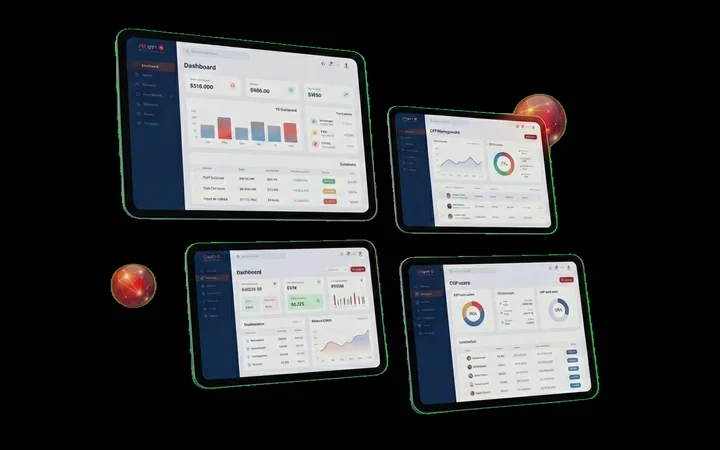
Every build ships as four parts: the workflow itself in n8n, self-hostable in your own infrastructure; an exception queue that routes anything the system isn't sure about to a human, so judgment stays with your team; an hours-saved dashboard, updated live and reviewed monthly; and a runbook. The same pattern applies across industries — one named workflow, one number your finance manager can read in 60 seconds.
Examples already mapped to our industry pages: order-to-ERP sync and Arabic catalog updates for retail; supplier invoice and POD extraction plus shipment-status auto-replies for logistics; invoice reconciliation and daily sales roll-ups for restaurants and F&B; portal lead capture and CRM routing for real estate; purchase-order intake for manufacturing; and subcontractor document tracking for construction.
The Nano Method: baseline first, dashboard always
Assess → Pilot → Prove → Scale → Operate. Week 1 is a process inventory and a measured manual baseline — hours, error rate — signed off before a single line of the workflow is built, so the savings number is defensible, not marketing. Weeks 2-4 build the workflow in n8n with evals on every LLM decision step from day one. The next 30 days run it on live volume while the dashboard counts runs, exceptions, and hours saved against that baseline. We decline 'automate everything' scopes: one flagship workflow first is a feature, not a limitation.
Fixed-scope pricing, published
A Single-Workflow Automation starts from $1,900 — one workflow such as lead routing, invoice intake, or a WhatsApp ↔ sheet/CRM sync, built on n8n or Make in about two weeks against a written scope. Multi-workflow fixed-scope builds run $5,000-15,000, quoted in writing after the assessment week — the price moves with the number of systems integrated, the AI decision steps needing eval suites, and document volume and format variance. Every proposal carries an ops retainer from $490/month for a single workflow to $1,000-3,000/month for multi-workflow builds, cancelable after month three and never discounted. If your workflow is a simple trigger with no AI decisions in it, Zapier or n8n self-serve may genuinely be enough — we'll tell you so in the scoping call.
We show our dashboards — including our own
Before our first published case studies, we show you the artifacts themselves: our own lead-intake-to-invoicing automation as an annotated architecture diagram with real internal run counts, the exact hours-saved dashboard populated with clearly labeled sample data, an anonymized eval report for a document-extraction step, and a two-minute demo video of an Arabic invoice moving through the pipeline. We never fabricate logos or testimonials — where we don't yet have client proof, we show you the methodology instead.
Built on n8n. Owned by you.
n8n is open-source, enterprise-standard tooling at a $5.2B valuation after SAP's May 2026 investment — not a garage tool — and self-hostable in your cloud or on-premises for PDPL and data-residency needs. LLM steps run through an abstraction layer so models can be swapped, with evals re-run on every model or prompt change. We integrate ERPs (SAP Business One, Odoo, Zoho, QuickBooks), CRMs (HubSpot, Salesforce, Zoho CRM, Pipedrive), commerce platforms (Salla, Zid, Shopify, WooCommerce), messaging (WhatsApp Business API, email, Slack, Microsoft Teams), and storage systems (Google Workspace, Microsoft 365, SharePoint).
You own the n8n workspace and every workflow in it. The retainer is for expertise, not hostage-taking — if you leave, everything keeps working.
AI automation agencies in Dubai, Saudi Arabia, and across the GCC
Builds run on GCC hours (GMT+3, Sunday-Thursday), serving KSA, UAE, Egypt, Qatar, Kuwait, Bahrain, and Oman, with Arabic-capable pipelines handling Gulf dialect and Arabizi WhatsApp messages as workflow triggers and outputs — the exact place Zapier templates and Western agencies tend to fail.
Pricing
One flagship workflow, priced after we measure your real baseline — not before.
One workflow — lead routing, invoice intake, WhatsApp ↔ sheet/CRM sync, or similar — built on n8n or Make against a written scope, with an exception path and a runbook. The fastest way to put a number on one process.
Flagship workflow in n8n (self-hostable), baseline measurement, evals on every AI decision step, exception queue with human escalation, hours-saved dashboard, runbook, and 30 days of post-launch fixes free. Price moves with systems integrated, AI decision steps needing eval suites, and document volume and variance.
Monitoring and exception-rate alerts, eval re-runs on every model or prompt change, model and API migrations, counterparty format-change fixes, and a monthly report with a review call. In every proposal from day one — an unmaintained LLM workflow is a demo with a countdown timer.
Hours-saved dashboard live at handover, or the final payment isn't due. 30 days of post-launch bug fixes free.
Frequently asked questions
From $1,900 for a single workflow (lead routing, invoice intake, WhatsApp ↔ sheet/CRM sync — about two weeks on n8n or Make), or $5,000-15,000 for a multi-workflow fixed-scope build, quoted after a one-week assessment that measures your manual baseline. What moves the price: how many systems we integrate, how many AI decision steps need eval suites (document extraction, classification, drafting), and document volume and variance. Every build carries an ops retainer — from $490/month for a single workflow, $1,000-3,000/month for multi-workflow builds — for monitoring, exception handling, and model updates. That is how production automation stays alive, and it is in every proposal from day one. You get the exact number, in writing, from one scoping call.
Production in roughly a month for a multi-workflow build (about two weeks for a single workflow), and your first defensible before/after report about 30 days after that. Week 1 is assessment: we pick the flagship workflow and measure your current manual baseline on real volume. Weeks 2-4 are the build, with instrumentation and evals from day one. Then the workflow runs on live volume for 30 days while the dashboard counts runs, exceptions, and hours saved against that baseline. If the dashboard isn't live at handover, the final payment isn't due.
Usually invoice and document intake, CRM data entry, status-inquiry replies, or recurring report compilation — whichever is highest-volume, mostly repetitive, and measurable today. Those are the three tests: high volume (happens daily, not quarterly), rule-plus-judgment shape (mostly repetitive, with exceptions a human should still decide), and measurability (you can count the hours it eats today). In the assessment week we inventory your candidates, score them with you, and pick one flagship — we deliberately decline 'automate everything' scopes, because that is how the 95% of failed AI pilots happen.
Yes — this is our specialty. We process Arabic and mixed Arabic/English invoices, contracts, and forms, including scanned documents, and we build evals in both languages so extraction accuracy is measured, not assumed. Workflows can also read and send Gulf-dialect and Arabizi WhatsApp messages — a shipment-status question gets answered from your live data automatically. Roughly 95% of global automation vendors and templates fail exactly here; it is the first thing we demo.
Saudi PDPL, UAE PDPL, and Egyptian Law 151/2020 alignment is part of scope, not an add-on — and the workflow can run self-hosted in your own environment. n8n is open-source, so we deploy it in your own cloud or on-premises infrastructure when data residency requires it, and your documents and customer data stay with you. Credentials remain in your systems, we sign a data processing agreement, and consent flows are designed in where personal data is processed. For EU-touching work we operate under GDPR terms.
Ours cannot fail silently: anything uncertain goes to a human exception queue, exception-rate spikes alert us, every AI decision step has evals, and the ops retainer keeps it watched. Nothing is wrong with Zapier for simple triggers — we say so plainly. The failure you experienced comes from automation without an exception path or monitoring: when an API or document format changes, the flow fails quietly and nobody is told. Silent failure is the specific engineering problem this service exists to eliminate.
Because the environment does not stand still: model providers deprecate APIs, your suppliers change invoice layouts, prompts drift as inputs shift, and integration endpoints update. The retainer (from $490/month for a single workflow, $1,000-3,000/month for multi-workflow builds) covers monitoring, exception-rate alerts, re-running eval suites whenever a model or prompt changes, migrations to newer models, and a monthly report with a review call. It is cancelable after month three — but an unmaintained LLM workflow is a demo with a countdown timer, which is why the retainer is in every proposal.
No, structurally. n8n is open-source; you own the workspace and every workflow in it, and it can run entirely on your infrastructure. At handover you receive the runbook — what the system does, what to do when it misbehaves, who to call — and dashboard access stays yours regardless. If you leave, everything keeps working and your team or another vendor can maintain it. We keep clients with a monthly number that justifies the invoice, not with lock-in.
Industries we serve with this
Pick the process. We'll put a number on it.
Fixed scope from $1,900 · baseline measured before we build · dashboard at handover, or the final payment isn't due.
- Free Scoping Call
- Fixed Scope & Quote
- Zero Commitment