






Arabic AI Medical Scribe — Draft Clinical Notes You Review and Sign
Nano AI's medical scribe listens to the consultation the way it actually happens — Arabic dialect, English medical terms, even Franco-Arabic — and drafts the clinical note in your format. You review, edit, and sign. Nothing enters the record without you. From $80/month per doctor, pilot pricing while we run cohort 1.

Documentation only — the scribe never diagnoses. No time saved in 30 days and the pilot month is free.
You became a doctor to see patients, not to type
Picture a dermatologist in Riyadh seeing 28–35 patients a day, consulting in Najdi Arabic, switching mid-sentence into English clinical terms — “we'll start isotretinoin, five-milligram, review the LFTs” — with the occasional patient replying in Franco-Arabic over the clinic's WhatsApp. Her clinic-management system requires typed English notes for insurance, so she either types during the consult, eyes on the keyboard instead of the patient, or stays 60–90 minutes after the last appointment reconstructing the day from memory — which is exactly when the clinical detail dies.
She tried a dictation app: it transliterated the dialect into nonsense and dropped every drug name. She tried a global AI scribe trial: impressive in English, useless the moment the patient spoke Arabic. Three failure modes, one root cause — typing during the consult breaks eye contact and thins the notes; dictation apps mangle dialect and force doctors to speak like a machine; global scribes are dead on arrival with any Arabic, English, or Franco mix. The problem was never the doctor. The tools were never built for how her consultations actually sound.
A draft note waiting for your signature
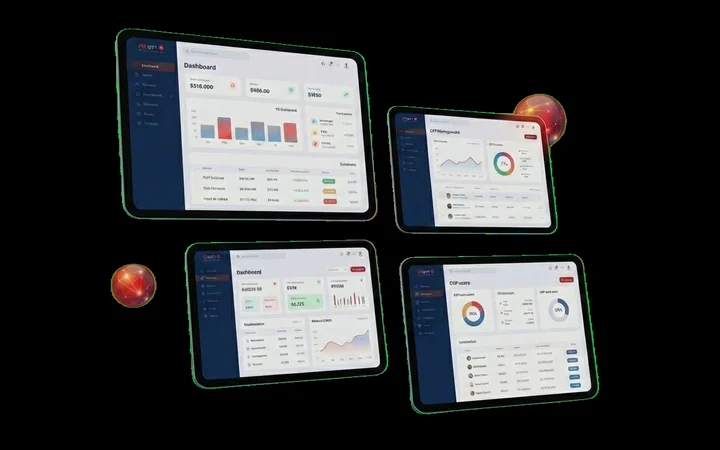
The flow is four steps, all in the room. First, consent at reception — the patient agrees before anything records, and a declining patient is documented the traditional way. Second, the scribe listens: no wake words, no dictation grammar, just natural speech in any mix of Arabic, English, and Franco. Third, the draft appears in SOAP or your clinic's own template, before the patient even reaches the front desk. Fourth, you review, edit, and sign — and that edit-time is logged automatically, becoming the minutes-saved report your pilot is measured on.
The day-30 report shows baseline minutes per consultation, pilot minutes per consultation, minutes saved per day, and the percentage of notes signed same-day — all measured, none of it invented. The principle is stated plainly, in both languages, because it is the whole trust model: the scribe drafts, you decide, and a note without your signature does not exist.
Built for consultations in Arabic, English — and both at once
One recording can contain Gulf or Egyptian dialect, English medical terminology, and Franco-Arabic code-switching in the same sentence — and still produce a structured note in your clinic's format. Global scribes in the Abridge/Nuance tier have near-zero dialect handling; dictation apps require the doctor to change how they speak. We publish specialty golden-set evaluations built from consented, de-identified recordings, versioned and re-tested on every model change, and we launch one medical specialty at a time so the vocabulary is deep rather than shallow — depth over breadth is the product strategy, not a limitation we're hiding.
Roughly 95% of global AI vendors cannot handle dialectal Arabic, and none publish Arabic clinical evaluations. Augnito's Arabic scribe is deployed at Almoosa Health, a hospital system — enterprise vendors need hospital contract sizes and structurally skip private clinics. From $80/month per doctor, this is priced for the tier nobody else serves.
From baseline to proof in 45 days
MIT NANDA's research found that 95% of enterprise gen-AI pilots produce no P&L return — which is exactly why this pilot is instrumented from day zero, not measured after the fact. Week 0 (Assess) times your current documentation on five real consultations and installs the consent kit at reception. Days 1–14 (Pilot) tune the scribe to your specialty vocabulary and note format while you use it on real consultations with full review-first control. Days 15–45 (Prove) continue instrumented use and produce the day-30 minutes-saved report per doctor — the guarantee gate. After the pilot (Scale), more doctors and branches can join, with a second specialty only after retention proof. Monthly (Operate), terminology additions come from your own edits, evals re-run on every model update, and you receive a fresh minutes-saved report every month.
Clinic pricing, per doctor, in USD — pilot pricing, waitlist open
This is a pilot-program page, not a live storefront: cohort 1 opens in November 2026 in one medical specialty, with limited clinic seats so every pilot clinic gets real engineering attention. It is a pure subscription — no setup fee, no separate operations retainer. The pilot month is billed at your tier's price and refunded in full under the guarantee below. Joining the waitlist locks in pilot pricing and commits you to nothing.
Solo Doctor is $80/month and includes one specialty, draft notes plus the review app, PDF/print export, and a monthly minutes-saved report. Clinic (2–10 doctors) is $140/month per doctor and adds the clinic dashboard, custom note templates, and structured copy-to-EHR export. Chain/Multi-branch (10+ doctors) is $220/month per doctor and adds EHR integration scoped per system, an SLA, and multi-branch reporting.
Patient recordings: consent, custody, deletion
Patients consent at reception, in Arabic and English, before any recording begins — a patient who declines is simply documented the old way, with zero pressure. Audio and notes are hosted regionally, encrypted in transit and at rest, and accessible only to the treating doctor and named clinic admins. Audio is deleted on a contractual schedule after the note is signed, and patient data is never used to train public models. Deployments are designed around Saudi PDPL, UAE data protection law, and Egypt's Law 151/2020, with a data-processing agreement included in every contract.
This product documents consultations. It does not diagnose, recommend treatment, or triage patients — by design and by contract. That boundary is what keeps the scribe a documentation assistant, never a clinical decision-maker.
What we can show you today — honestly
Before any pilot case study exists, we show you the real artifacts: a 2-minute product walkthrough of a simulated consultation (labeled as such), a minutes-saved report template populated with clearly labeled sample data, and a description of our eval methodology. For category context — not our own results — Middle East healthcare AI is projected to grow from $436M in 2024 to $8.4B by 2033 (Grand View, vendor estimate), Augnito's Arabic scribe has been live at Almoosa Health since January 2025, and 21Doctors raised a pre-seed round in September 2025. We never invent clinic names, doctor names, or outcomes — until a pilot clinic consents in writing, every proof slot renders the anonymized template, clearly labeled.
Works alongside your clinic system from day one
At launch, the scribe works alongside any clinic-management system or EHR: the signed note exports as structured text matched to your template, as PDF, or for print, and most clinics paste it into their existing system in seconds — a step the minutes-saved measurement includes, so the reported number is honest end-to-end. Direct EHR integrations are scoped per system for chains through our AI Integrations engineering practice; we name no vendor partnership that doesn't exist. On the model layer, we benchmark frontier multilingual speech models against fine-tuned options on our own specialty eval set, version every prompt, and run automation on n8n where clinic workflows need it. If your front desk is also drowning in missed calls, the scribe pairs with our Arabic Voice AI Agents — one clinic stack, from the phone call to the signed note.
Pricing
Pilot pricing, locked for cohort 1 — the waitlist is open now, and general availability follows cohort results expected from December 2026.
1 specialty, draft notes plus the review app, PDF/print export, and a monthly minutes-saved report. Pilot month refunded in full if no time saved is measured.
Everything in Solo Doctor, plus the clinic dashboard, custom note templates, and structured copy-to-EHR export.
Everything in Clinic, plus EHR integration scoped per system, an SLA, and multi-branch reporting.
Pilot-month guarantee: if measured edit-time shows no time saved vs. the doctor's recorded baseline in 30 days, the pilot month is free.
Frequently asked questions
From $80 per doctor per month for a solo practice, $140 for clinics with 2–10 doctors (adds the clinic dashboard, custom templates, and structured export), and $220 for chains that need scoped EHR integration and an SLA. It is a pure subscription — no setup fee, no separate maintenance retainer. This is pilot pricing: the pilot month is billed at your tier price and is free if the day-30 report shows no time saved against your measured baseline.
Arabic dialects (Gulf and Egyptian first), English medical terminology, and Franco-Arabic code-switching — all in one recording, without you changing how you speak. That is how MENA consultations actually sound, and the scribe is built for it. We launch one medical specialty at a time so the vocabulary is deep rather than shallow, and every specialty ships with a golden-set evaluation built from consented, de-identified recordings that we re-run whenever the underlying models change. If your specialty isn't live yet, the waitlist form captures it — specialty demand directly drives our rollout order.
No — categorically, and by design. The scribe is a documentation assistant: it listens to the consultation and drafts the clinical note in your format. It never produces a diagnosis, never recommends a drug or dosage, and never triages patients. Every draft requires your review and signature before it becomes part of any record; a note you haven't signed does not exist. This boundary is written into the product, the contract, and this page — it is what keeps the tool in the documentation-assist category and keeps every clinical decision where it belongs: with the physician.
Recordings are encrypted, hosted regionally, and deleted on a contractual schedule after the note is signed — and deployments are designed around Saudi PDPL, UAE data protection law, and Egypt's Law 151/2020. Patients consent at reception before anything is recorded; we provide the Arabic/English consent script, signage, and patient FAQ, and a patient who declines is simply documented the old way. Audio is encrypted in transit and at rest and accessible only to the treating doctor and named clinic admins. Patient data is never used to train public models, and every contract includes a data-processing agreement stating exactly where audio lives and when it dies.
We prove it with measured minutes: your edit-time is logged against a recorded baseline, and if the day-30 report shows no time saved, the pilot month is free. Agreed — a scribe that's 90% accurate but needs a full rewrite is 100% useless, which is why we never sell accuracy percentages. In week 0 we time your current documentation on five real consultations. During the pilot, the review screen logs your edit-time on every draft. Day 30 produces a per-doctor minutes-saved report against that baseline. You judge the product the way you'd judge a new instrument: by what it does in your hands, measured.
The pilot waitlist is open now. Cohort 1 starts in November 2026 in one specialty, with limited clinic seats so every pilot gets engineering attention; general availability follows cohort results, expected from December 2026. Waitlist clinics get first access in their specialty, locked pilot pricing, and the baseline time-audit worksheet immediately — so you can measure your documentation burden before the pilot even begins. Egyptian clinics can join earlier evaluation rounds in Cairo. Joining the waitlist commits you to nothing; it reserves your place in the specialty queue.
From day one it works alongside any system: the signed note exports as structured text matched to your template, PDF, or print — most clinics paste into their existing system in seconds, and the minutes-saved measurement includes that step, so the reported number is honest end-to-end. Direct EHR integrations are scoped per system on the Chain tier through our AI Integrations engineering practice. Tell us your system in the waitlist form; integration demand shapes the roadmap, and chains with 10+ doctors can have integration scoped during the pilot itself.
We are built for private clinics and code-switched Arabic consultations at clinic pricing from $80 per doctor; Augnito serves hospital systems and global scribes are English-first. Augnito's Arabic scribe is deployed at Almoosa Health — a hospital system with hospital-scale contracts; enterprise vendors structurally skip private clinics because their sales costs demand large deals. Global scribes like Abridge or Nuance DAX are excellent in English and near-zero on Arabic dialect and Franco code-switching, so notes come back wrong the moment your patient speaks. Our tier and language mix is the one nobody serves: private clinics and small chains, code-switched MENA consultations, and a review-first product where you sign every note.
Industries we serve with this
Your evenings are worth a pilot month
One specialty. One month. A stopwatch, not a brochure. If the day-30 report shows no time saved, the pilot month is free. Join the waitlist now to lock in pilot pricing and secure your place in the specialty queue for cohort 1.
- Free Scoping Call
- Fixed Scope & Quote
- Zero Commitment